How Shepherd Color challenges the chemistry of pigments to address regulatory pressures
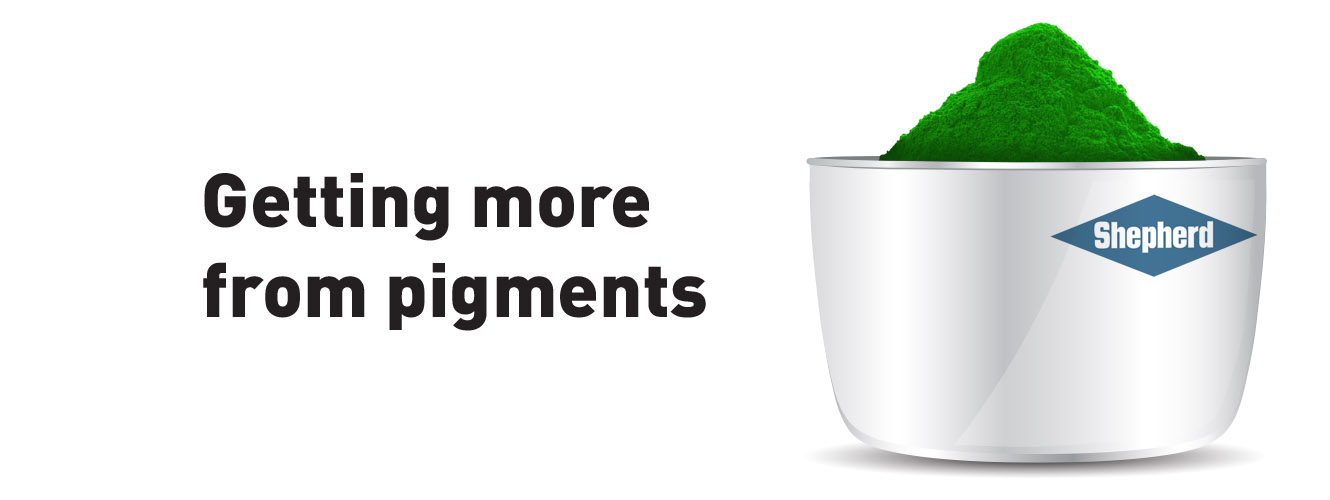
(Excerpt from Compounding World September 2019 Issue) Pigment chemistries continue to come under regulatory pressure, based on their chemical composition and physical forms as well as challenges from non-governmental organisations. “We continue to push the edge of currently used chemistry to find new pigments that address new regulatory pressures,” says Mark Ryan, Marketing Manager at Shepherd Color.
One example of this push is the company’s removal of nickel from the composition of its CI Pigment Green 50 (PG50), due in part at least to concerns in the EU. Pigment Green 50 is often used in place of green chromium oxide (PG17) because it is more chromatic and does not contain chromium. Shepherd Color’s Green 10G603 is free of both nickel and chromium and is literally “greener”. “It has an increased negative a* value that denotes how green in colour a pigment is,” explains Ryan.
To read the entire article by Jennifer Markarian, Contributing Editor for Compounding World, click here.
Share This Story, Choose Your Platform!
Recent posts
October 8, 2026
Shepherd Color Named a PPG 2025 Excellent Supplier Award Winner
September 25, 2026
2026: One Hot Summer, The Urban Heat Island Effect
September 24, 2026
Shepherd Color Featured in September 2026 Edition of Compounding World
July 14, 2026
Expanding the Durable Color Envelope with NTP Yellow and RTZ Orange
June 4, 2026
Innovative IR Black Pigments
March 16, 2026
Shepherd Color: 60 Years of Exposure